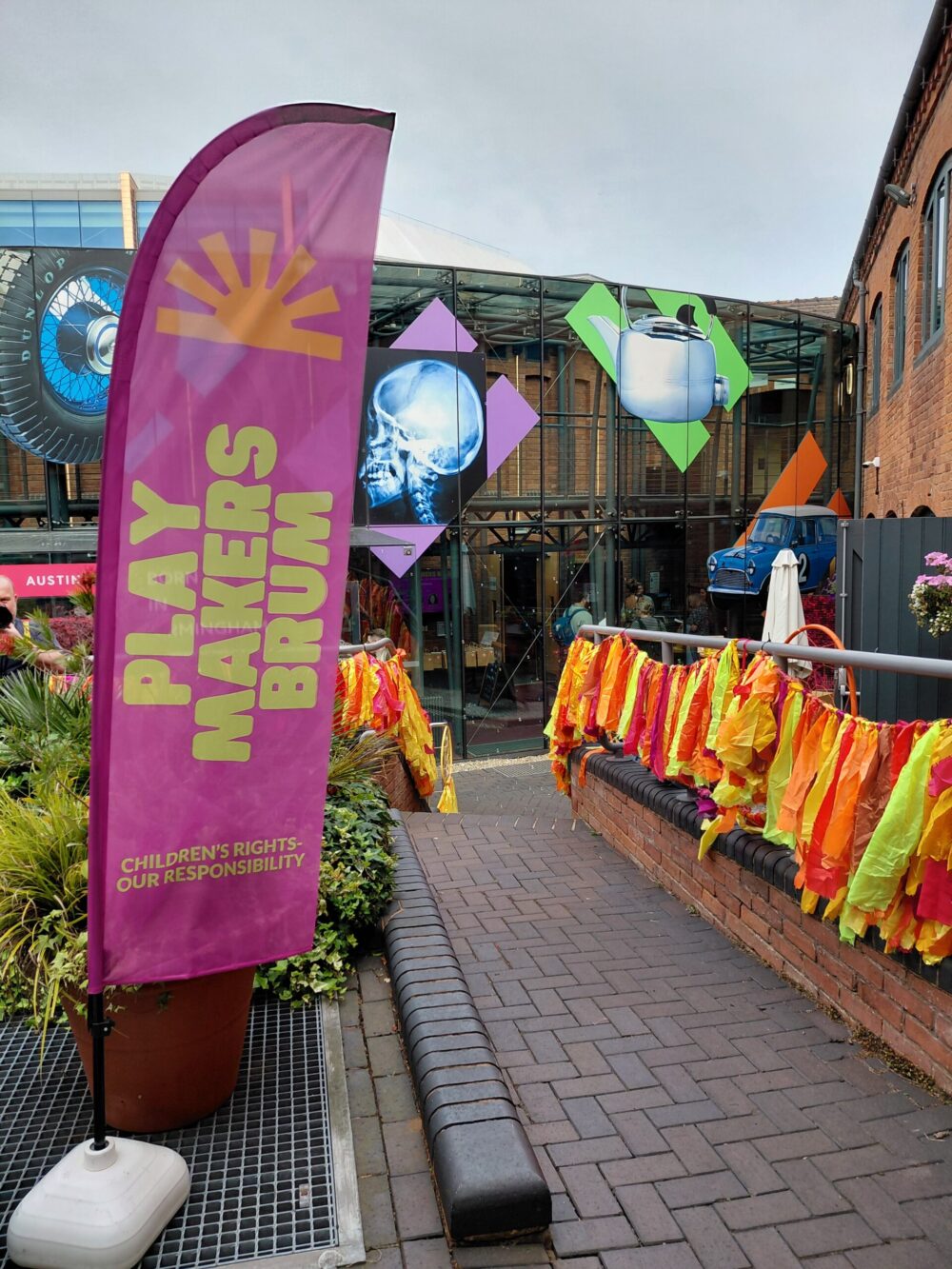
A few months ago, Kaleigh from Magic of Play came to us with an idea: what if we brought together the people making play happen across Birmingham and the West Midlands, not just to talk about children’s right to play, but to celebrate it, share it, and build something together?
That idea became Play Makers Brum: Children’s Rights, Our Responsibility, co-hosted by ROAM, Magic of Play and OPAL West Midlands at Austin Court on the third of July. And what a day it was!
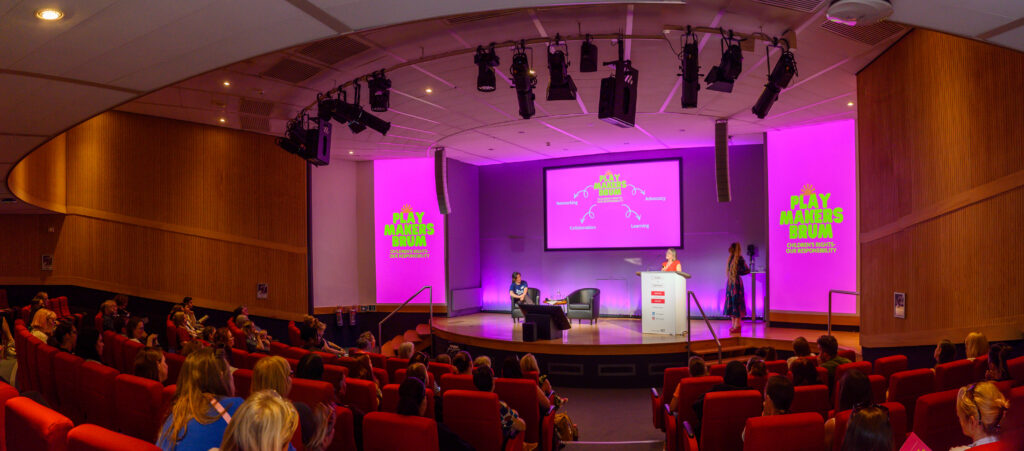
Who was in the room
Play makers, policy makers, teachers, playworkers, community organisations and researchers. A room full of fantastic people, and still just representing a small piece of the brilliant work happening for children across our city and region. That was one of the things delegates told us they’d take away:
‘There is a whole community of likeminded people in the West Midlands who are actively changing our area.’


The talks
Professor Helen Dodd from the University of Exeter opened the day with the research behind why play matters for children’s mental health. Adventurous play- the exciting, thrilling kind where children take age-appropriate risks- gives them the chance to experience fear in a positive context and learn that they can cope with it. Her research shows adventurous play is linked to better wellbeing, with the strongest effects for children from lower-income households. It was a powerful reminder that play isn’t a luxury; it’s how children build resilience.
Emma Bearman of Playful Anywhere CIC shared fourteen years of putting play at the heart of public space, from community-owned Playboxes in parks to playful high streets, showing what happens when communities are trusted to make play happen on their own terms.
Sarah Robbins of the Springfield Project told the story of Sparkhill’s Child Friendly Neighbourhood programme: what it means for a grassroots community organisation to ask around 1,000 children each year what it’s like to grow up in their neighbourhood, and then act on the answers. The children’s priorities will sound familiar to anyone who works with young people anywhere: feeling safe, having places to play and meet friends, and access to clean, green spaces. From tree planting and a forest school site to young people sitting on the Springfield Project’s Board of Trustees, Sparkhill is showing what a child-friendly neighbourhood built from the ground up looks like.
And holding the whole day together was our fantastic host Amber Ogunsanya-William aka Playworker Amber, who travelled up from London to be with us and kept everything flowing with warmth and wonderful energy.


The workshops
Throughout the day, our delegates each attended three workshops.
GLUE Collective asked ‘What is a SPARK?’ and had everyone creating with natural materials; delegates came out clutching beautifully decorated story sticks. Our own ROAM-IN Leader Sarah Green explored what inclusive play really looks like, working through real scenarios about how to support children with additional needs and their families outdoors. Ali Wood of Meriden Adventure Playground led a session on therapeutic playwork, sharing how adventure playgrounds give children space to run, climb, build, dare, be daft and feel part of things. Judging by the feedback, her talk struck a chord with everyone in the room.
And the Springfield Project’s session was led by their fantastic Youth Advisory Panel: incredible young people who are making a real difference to their community in Sparkhill and to our city. Hearing directly from them was, for many, a highlight of the day.


Our Movement Makers
The people in the room weren’t the whole story. Our programme also shone a light on six Movement Makers, organisations across Birmingham and the West Midlands doing brilliant things for children’s play:
Wild Lives Forest School CIC, supporting people in Sandwell and Birmingham to play and learn in nature. The Parakeet, a childhood-centred arts and play organisation in Sandwell championing children’s agency, creativity and belonging. Martineau Gardens, a therapeutic community garden in Edgbaston, open and free to all. And Eco Birmingham, connecting communities with the natural world through forest school, craftivism and permaculture.
They’re a glimpse, not a definitive list. There are hundreds of organisations doing brilliant things for children’s play across our region, and we hope to play a small part in building the network it deserves.
What people told us
The feedback has been incredible. When we asked delegates for their key takeaway, the same themes came up again and again: play matters, children need freedom and choice, and none of us are doing this alone.
‘Play is about children’s choice, and voice. Building resilience and taking controlled risk.’
‘Don’t wait for permission. Just do it!’
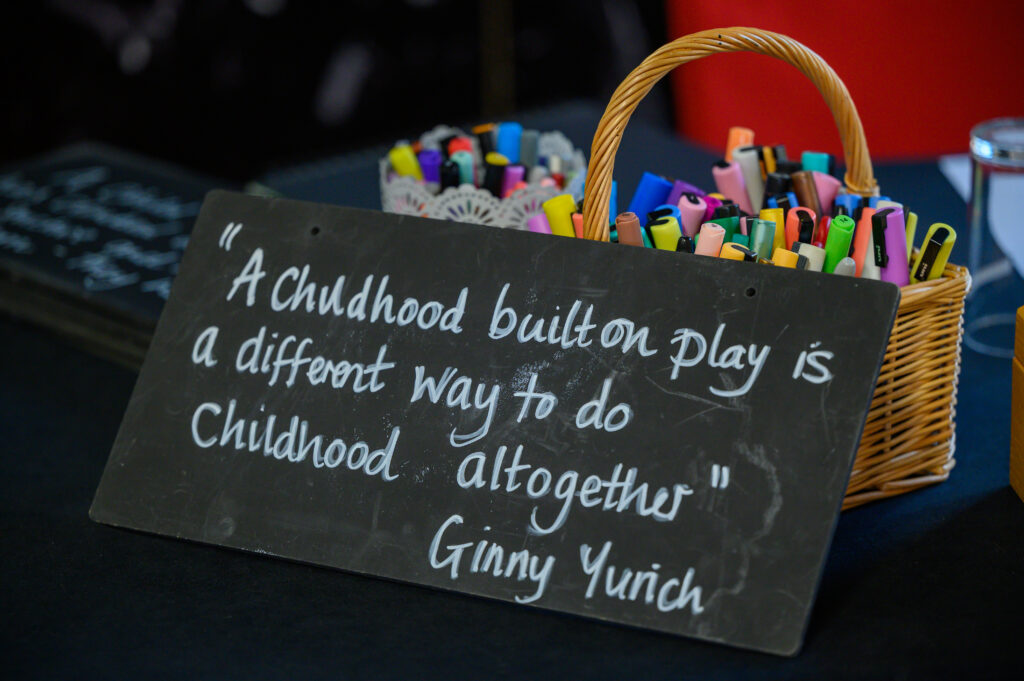
We also asked people what defines a playmaker. The answers ranged from the practical (‘someone who facilitates, not dictates’) to the joyful:
‘Defiant in the name of FUN.’
We couldn’t have put it better ourselves.
Where next?
We hope this won’t be a one off. Delegates told us they want more chances to connect, share ideas and resources, and push together for play to be taken seriously, locally and nationally.
Because the bigger picture matters. Children shouldn’t have to rely on being taken to playgrounds or sessions to enjoy something they’re entitled to. Children’s right to play needs to be embedded across our city: in how we plan transport, design streets and schools, and shape our parks and high streets. Transport planners, health professionals, teachers, parents, architects: we can all play our part.
The energy in the room on the 3rd of July told us people are ready for that.
Stay connected
If you’d like to hear about what comes next, including future events join our Play Makers Brum mailing list HERE.
Thank you to everyone who made the day possible: our co-hosts Magic of Play/OPAL West Midlands, our speakers and workshop leads, Amber Ogunsanya-William for hosting with such wonderful energy, OPUS for the playful decor, Nick Robinson for the photographs, and everyone who joined us.
We hope to see you next time.